
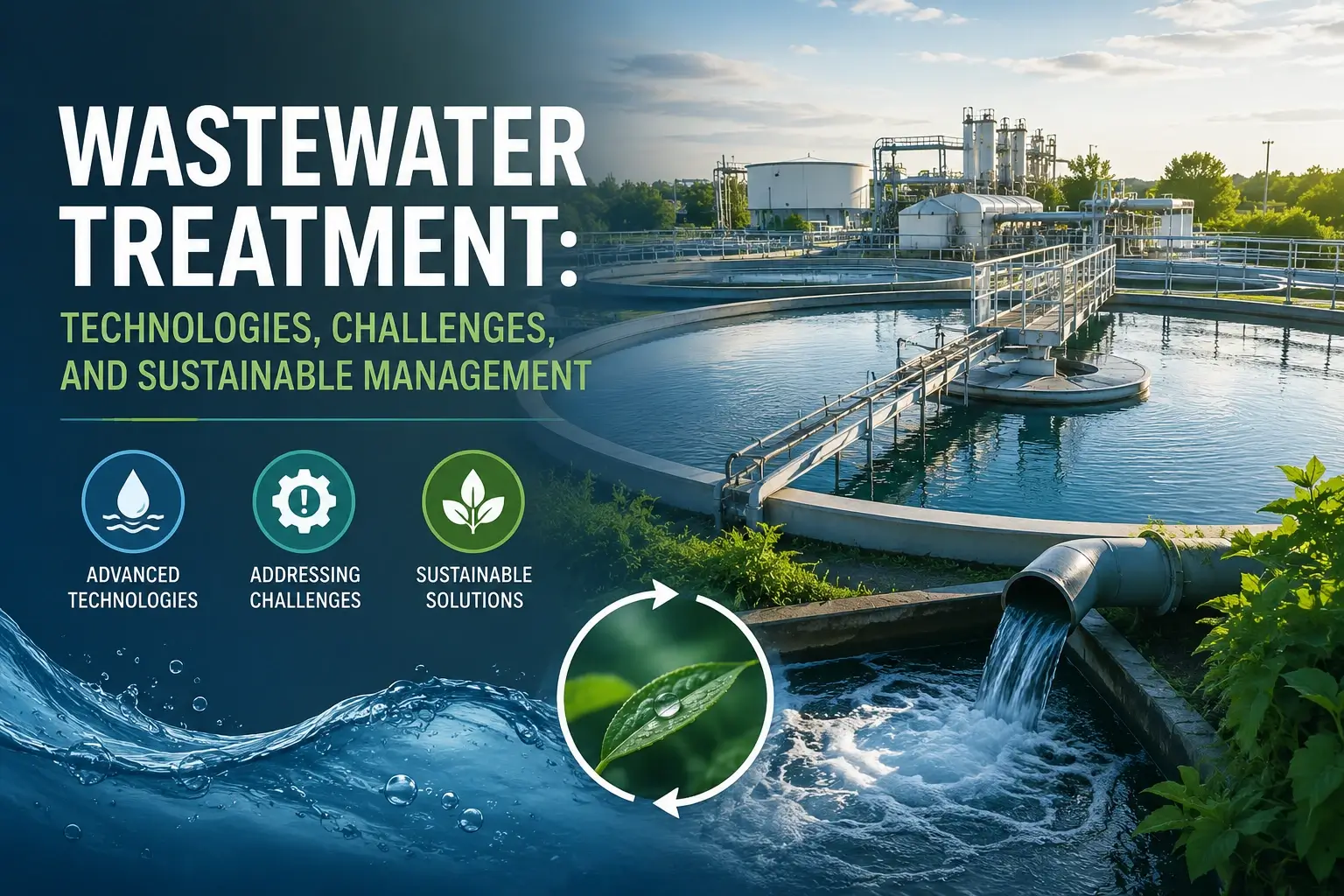
Wastewater treatment is a critical process in environmental engineering designed to remove contaminants from water that has been used in domestic, industrial, or agricultural activities. The primary goal of Wastewater Treatment is to produce an effluent and a solid waste (sludge) suitable for discharge or reuse. As global populations expand and industrialization accelerates, the volume and complexity of wastewater have grown exponentially.
The global challenge of water pollution is staggering; the United Nations estimates that over 80% of all wastewater generated globally is discharged back into the environment without adequate treatment. This practice degrades freshwater ecosystems, threatens public health, and exacerbates water scarcity. The objectives of modern wastewater management have evolved from simple pollutant removal to encompassing environmental conservation, regulatory compliance, water reuse, and resource recovery, forming the bedrock of sustainable water management.
Sources of Wastewater
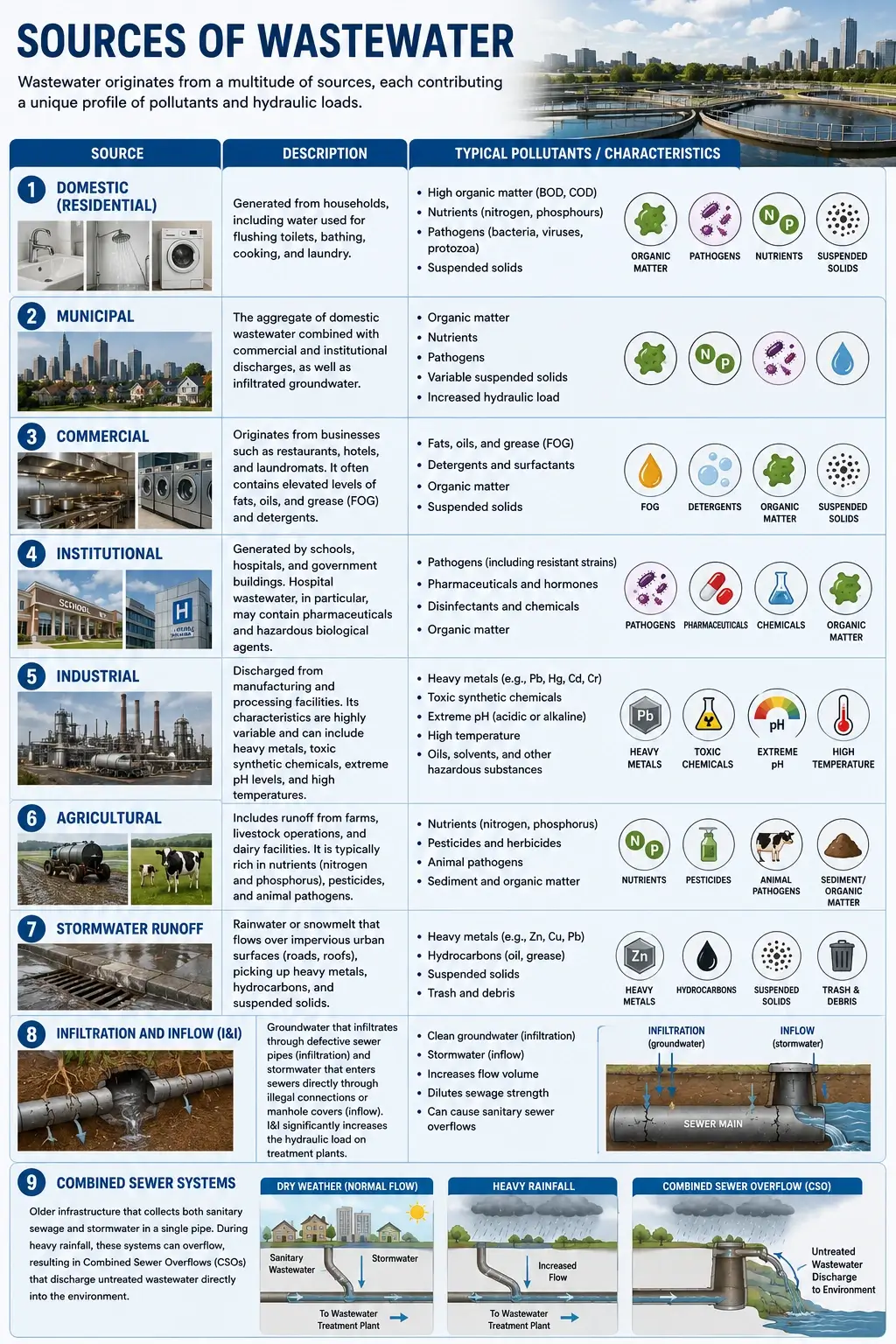
Wastewater originates from multiple sources, each presenting unique treatment challenges:
- Domestic Wastewater: Generated from households, comprising blackwater (toilet flushes) and greywater (sinks, showers, laundry). It is rich in organic matter, nutrients, and pathogens.
- Industrial Wastewater: Discharged from manufacturing processes. Its composition varies wildly depending on the sector, often containing high concentrations of specific chemicals, heavy metals, and extreme pH levels.
- Agricultural Runoff: A non-point source containing fertilizers, pesticides, animal waste, and sediment, leading to severe nutrient loading in surface waters.
- Stormwater: Rainwater or snowmelt flowing over impervious urban surfaces, picking up oils, heavy metals, and litter.
- Healthcare and Pharmaceutical Wastewater: Contains active pharmaceutical ingredients (APIs), pathogens, and hazardous chemicals, requiring specialized effluent treatment plant (ETP) protocols.
Characteristics of Wastewater
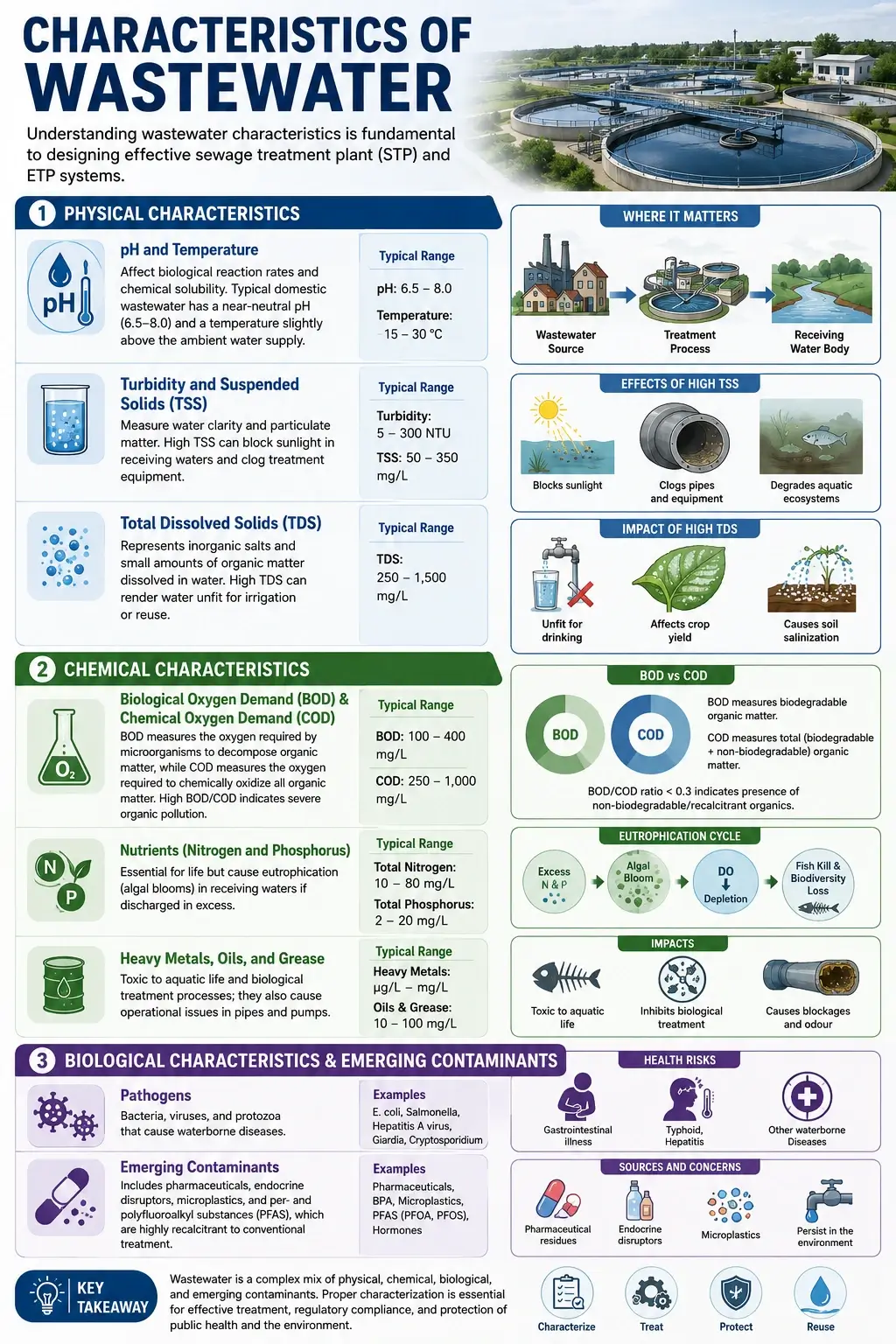
Understanding wastewater characteristics is fundamental to designing effective sewage treatment plant (STP) and ETP systems.
Physical Characteristics
- pH and Temperature: Affect biological reaction rates and chemical solubility. Typical domestic wastewater has a near-neutral pH (6.5–8.0) and a temperature slightly above the ambient water supply.
- Turbidity and Suspended Solids (TSS): Measure water clarity and particulate matter. High TSS can block sunlight in receiving waters and clog treatment equipment.
- Total Dissolved Solids (TDS): Represents inorganic salts and small amounts of organic matter dissolved in water. High TDS can render water unfit for irrigation or reuse.
Chemical Characteristics
- Biological Oxygen Demand (BOD) & Chemical Oxygen Demand (COD): BOD measures the oxygen required by microorganisms to decompose organic matter, while COD measures the oxygen required to chemically oxidize all organic matter. High BOD/COD indicates severe organic pollution.
- Nutrients (Nitrogen and Phosphorus): Essential for life but cause eutrophication (algal blooms) in receiving waters if discharged in excess.
- Heavy Metals, Oils, and Grease: Toxic to aquatic life and biological treatment processes; they also cause operational issues in pipes and pumps.
Biological Characteristics and Emerging Contaminants
- Pathogens: Bacteria, viruses, and protozoa that cause waterborne diseases.
- Emerging Contaminants: Includes pharmaceuticals, endocrine disruptors, microplastics, and per- and polyfluoroalkyl substances (PFAS), which are highly recalcitrant to conventional treatment.
Objectives of Wastewater Treatment
The modern paradigm of wastewater treatment is multi-faceted:
- Protection of Public Health: Eliminating pathogens and toxic compounds to prevent disease transmission.
- Environmental Conservation: Preventing eutrophication, hypoxia, and toxicity in receiving water bodies.
- Water Reuse: Producing high-quality effluent for agricultural, industrial, or even potable use.
- Regulatory Compliance: Meeting stringent local and national discharge limits.
- Resource Recovery: Extracting energy (biogas), nutrients (struvite), and clean water, transitioning facilities into “water resource recovery facilities” (WRRFs).
Wastewater Treatment Process
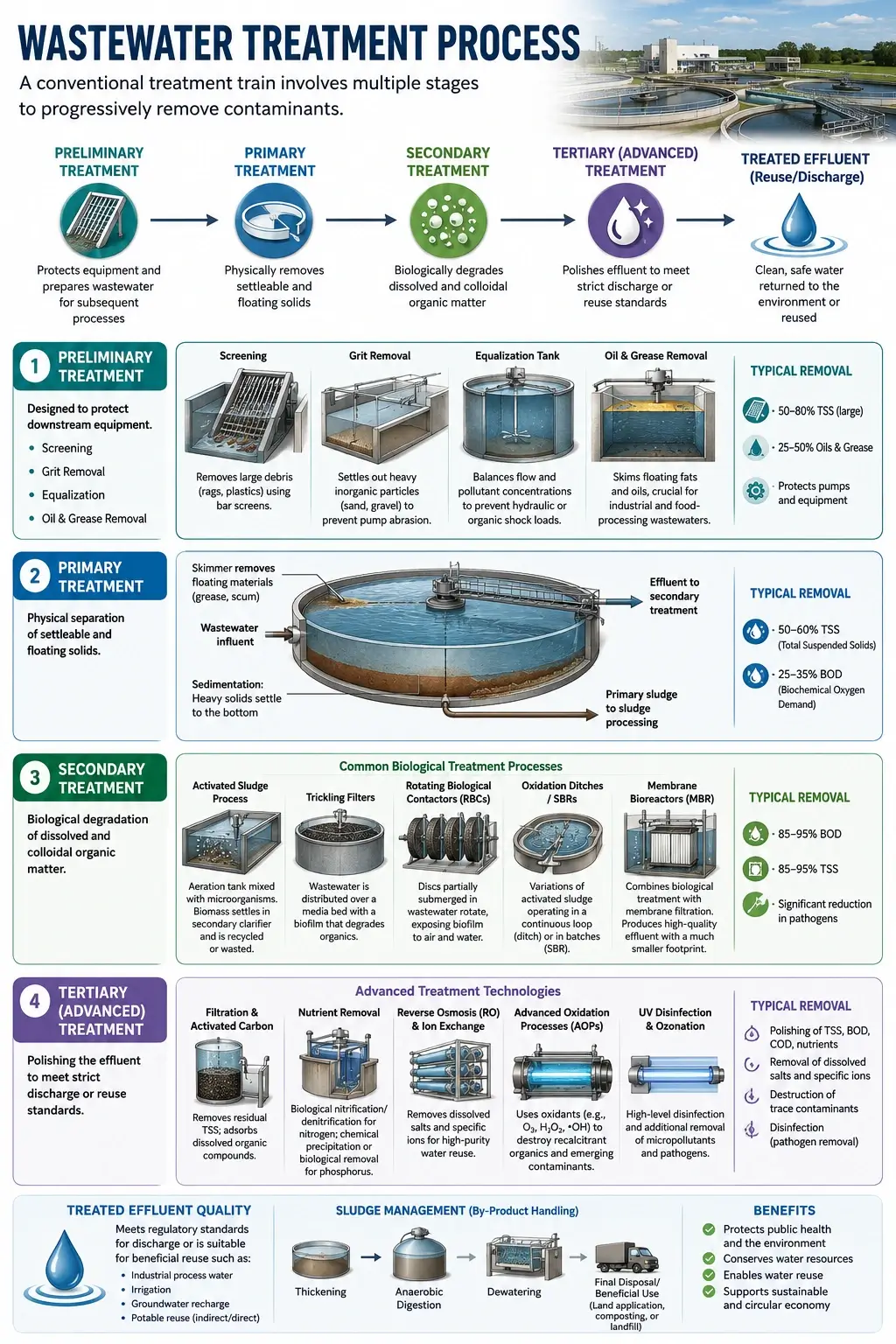
A conventional treatment train involves multiple stages to progressively remove contaminants.
Preliminary Treatment
Designed to protect downstream equipment.
- Screening: Removes large debris (rags, plastics) using bar screens.
- Grit Removal: Settles out heavy inorganic particles (sand, gravel) to prevent pump abrasion.
- Equalization: Balances flow and pollutant concentrations to prevent hydraulic or organic shock loads.
- Oil and Grease Removal: Skims floating fats and oils, crucial for industrial and food-processing wastewaters.
Primary Treatment
Physical separation of settleable and floating solids.
- Sedimentation and Clarifiers: Wastewater flows slowly through large tanks (primary clarifiers), allowing heavy solids to settle as primary sludge, while lighter materials (grease) are skimmed from the surface. This removes about 50-60% of TSS and 25-35% of BOD.
Secondary Treatment
Biological degradation of dissolved and colloidal organic matter.
- Activated Sludge Process: The most common biological treatment. Wastewater is mixed with a microbial community (activated sludge) in an aeration tank. Microorganisms consume organic matter. The mixture then moves to a secondary clarifier where biomass settles and is recycled or wasted.
- Trickling Filters: Wastewater is distributed over a bed of rocks or plastic media coated with a biofilm that degrades organics.
- Rotating Biological Contactors (RBCs): Discs partially submerged in wastewater rotate, exposing a biofilm to alternating wastewater and air.
- Oxidation Ditches and Sequencing Batch Reactors (SBRs): Variations of the activated sludge process operating in a continuous loop or batch sequence, respectively.
- Membrane Bioreactors (MBR): Combines biological treatment with membrane filtration (microfiltration/ultrafiltration), replacing secondary clarifiers. Membrane bioreactor technology produces exceptionally high-quality effluent with a much smaller footprint.
Tertiary (Advanced) Treatment
Polishing the effluent to meet strict discharge or reuse standards.
- Filtration and Activated Carbon: Removes residual TSS and adsorbs dissolved organic compounds.
- Nutrient Removal: Biological nitrification/denitrification for nitrogen; chemical precipitation or biological phosphorus removal.
- Reverse Osmosis (RO) and Ion Exchange: Removes dissolved salts and specific ions for high-purity water reuse.
- Advanced Oxidation Processes (AOPs), UV, and Ozonation: Destroys recalcitrant organics, emerging contaminants, and provides high-level disinfection.
Disinfection Methods
Disinfection is the final barrier against pathogens before discharge or reuse.
| Method | Advantages | Disadvantages | Applications |
|---|---|---|---|
| Chlorination | Cost-effective, provides residual disinfection, well-understood. | Forms toxic disinfection byproducts (DBPs) like trihalomethanes; hazardous chemical handling. | Large municipal plants, initial stages of reuse. |
| Ultraviolet (UV) | No chemical addition, no DBPs, highly effective against protozoa. | No residual protection, efficacy reduced by high TSS or turbidity. | Final disinfection for water reuse, sensitive ecosystems. |
| Ozone | Powerful oxidant, destroys emerging contaminants, no DBPs. | High energy and capital costs, forms bromate, no residual. | Pharmaceutical wastewater, high-quality potable reuse. |
| Peracetic Acid (PAA) | Effective over a wide pH range, fewer DBPs than chlorine. | Higher chemical cost than chlorine, distinct odor. | Alternative to chlorine where DBPs are strictly regulated. |
Sludge Treatment and Management
Sludge handling accounts for up to 60% of a plant’s operating costs. Effective management is critical.
- Thickening: Increases solids concentration (e.g., gravity thickeners, dissolved air flotation).
- Digestion: Stabilizes organic matter. Anaerobic digestion produces biogas (methane) for energy recovery. Aerobic digestion is simpler but energy-intensive.
- Dewatering: Reduces volume using centrifuges, belt filter presses, or drying beds.
- Drying and Incineration: Thermal processes that reduce sludge to a sterile, minimal-volume ash.
- Composting and Land Application: Stabilized, dewatered sludge (biosolids) is processed to meet regulatory standards and applied to agricultural land as fertilizer.
- Energy Recovery: Biogas from anaerobic digestion is used in combined heat and power (CHP) units to generate electricity and heat for the plant.
Wastewater Treatment Technologies
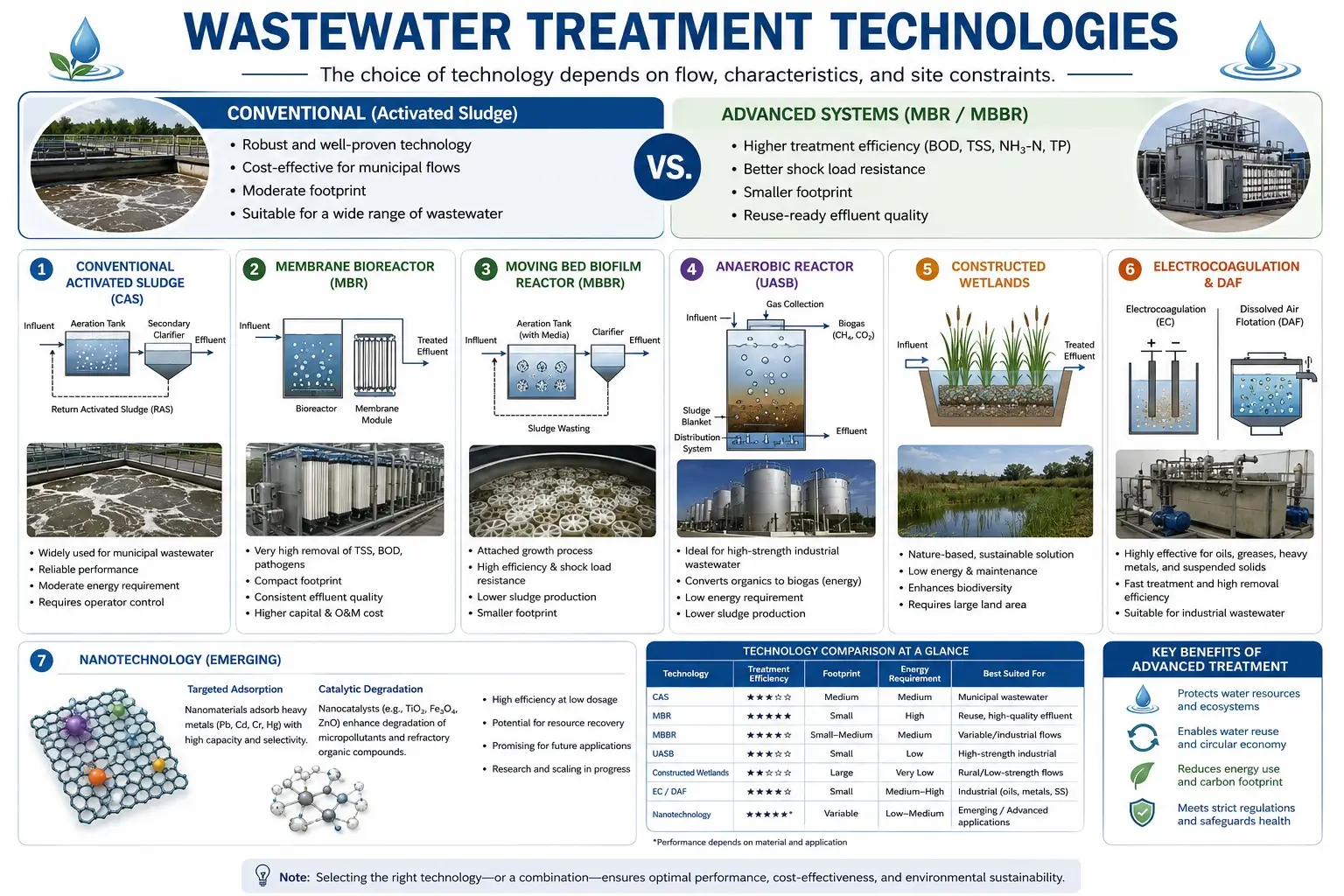
The choice of technology depends on flow, characteristics, and site constraints.
- Conventional vs. Advanced: Conventional activated sludge is robust and cost-effective for municipal flows. Advanced systems like Membrane Bioreactors (MBR) and Moving Bed Biofilm Reactors (MBBR) offer higher treatment efficiency, better shock load resistance, and smaller footprints.
- Anaerobic Reactors: Technologies like Upflow Anaerobic Sludge Blanket (UASB) are highly energy-efficient for high-strength industrial wastewater, converting organics directly to biogas.
- Constructed Wetlands: Nature-based solutions utilizing plants and microbial communities. Low energy and maintenance, but require large land areas.
- Electrocoagulation and Dissolved Air Flotation (DAF): Highly effective for removing emulsified oils, heavy metals, and suspended solids in industrial streams.
- Nanotechnology: Emerging applications using nanomaterials for targeted adsorption of heavy metals and advanced catalytic degradation of micropollutants.
Industrial Wastewater Treatment
Industrial wastewater requires tailored effluent treatment plant (ETP) designs due to its highly variable and often toxic nature.
| Industry | Key Pollutants | Typical Treatment Approach |
|---|---|---|
| Food Processing | High BOD/COD, TSS, fats, oils, grease (FOG). | Equalization, DAF, anaerobic digestion, aerobic polishing. |
| Textile | Color, high TDS, toxic dyes, surfactants. | Coagulation/flocculation, ozonation/AOPs, RO. |
| Chemical/Pharma | Complex organics, APIs, solvents, heavy metals. | Advanced oxidation, activated carbon, specialized biological. |
| Petrochemical | Hydrocarbons, phenols, sulfides, ammonia. | API separators, biological nutrient removal, stripping. |
| Mining/Metal Finishing | Heavy metals, extreme pH, suspended solids. | Chemical precipitation, ion exchange, reverse osmosis. |
| Power Generation | Thermal pollution, cooling tower blowdown, ash. | Cooling towers, zero liquid discharge (ZLD) systems. |
Water Reuse and Recycling
Water recycling is essential for closing the water loop. Applications include:
- Irrigation and Agriculture: The largest non-potable reuse sector, requiring strict pathogen control.
- Industrial Cooling and Process Water: Reduces freshwater extraction; requires control of scaling and corrosion (TDS management).
- Groundwater Recharge: Injecting treated effluent into aquifers to prevent saltwater intrusion and store water.
- Potable Reuse: Direct or indirect augmentation of drinking water supplies. Requires multi-barrier treatment (e.g., microfiltration, RO, UV/AOP).
- Urban Reuse: Toilet flushing, street cleaning, and ornamental fountains.
Environmental and Economic Benefits
Modern wastewater management yields profound benefits:
- Pollution Reduction: Protects aquatic ecosystems from eutrophication and toxic shocks.
- Resource Conservation: Reduces the strain on freshwater sources.
- Energy Generation: Biogas recovery can make plants energy-neutral or even energy-positive.
- Circular Economy: Recovery of phosphorus and nitrogen for fertilizers closes the nutrient loop.
- Climate Resilience: Decentralized reuse systems reduce vulnerability to droughts.
Challenges
Despite advancements, the sector faces significant hurdles:
- Emerging Contaminants: PFAS (“forever chemicals”), microplastics, and pharmaceuticals require expensive, energy-intensive advanced treatment (e.g., high-pressure RO, advanced AOPs).
- High Operational Costs and Energy Consumption: Aeration alone accounts for 50-60% of a municipal plant’s energy use.
- Aging Infrastructure: Many municipalities suffer from deteriorating pipes, leading to massive infiltration and inflow (I/I) and sanitary sewer overflows (SSOs).
- Climate Change: Increased frequency of extreme weather events causes hydraulic overloading and combined sewer overflows (CSOs), while droughts reduce dilution capacity in receiving waters.
- Regulatory Compliance: Meeting increasingly stringent limits for nutrients and emerging contaminants requires costly plant upgrades.
Future Trends
The future of environmental engineering in water treatment is digital, decentralized, and sustainable:
- Smart Wastewater Treatment Plants: Integration of IoT monitoring, sensors, and SCADA systems for real-time process optimization.
- Artificial Intelligence and Machine Learning: AI algorithms predict equipment failures, optimize aeration energy, and manage chemical dosing dynamically.
- Digital Twins: Virtual replicas of physical plants used to simulate scenarios, train operators, and test process modifications without risking actual operations.
- Carbon-Neutral Treatment Plants: Shifting from energy consumers to energy producers via advanced anaerobic digestion, thermal hydrolysis, and energy-efficient membranes.
- Green Infrastructure and Nature-Based Solutions: Integrating constructed wetlands, bioswales, and permeable pavements at the source to manage stormwater and reduce the load on centralized systems.
Case Studies
Case Study 1: NEWater, Singapore (Municipal Water Reuse)
Facing severe water scarcity, Singapore developed NEWater, a high-grade reclaimed water produced from treated domestic wastewater. The treatment train consists of conventional secondary treatment, followed by microfiltration (MF), reverse osmosis (RO), and ultraviolet (UV) disinfection. NEWater meets up to 40% of the nation’s water demand, primarily supplying the semiconductor industry and indirectly augmenting drinking water reservoirs, showcasing world-leading water recycling.
Case Study 2: Marselisborg Wastewater Treatment Plant, Denmark (Energy Positive)
Marselisborg in Aarhus is a pioneer in sustainable water management. Through rigorous optimization of the activated sludge process, implementation of advanced process control, and maximizing biogas production from sludge, the plant produces 150% of the energy it consumes. The excess energy is exported to the local grid, proving that carbon-neutral and energy-positive municipal treatment is commercially viable.
Case Study 3: Tirupur Textile ETP, India (Industrial Zero Liquid Discharge)
The textile hub of Tirupur faced severe environmental degradation due to dye-laden effluent. The regional effluent treatment plant (ETP) was upgraded to achieve Zero Liquid Discharge (ZLD). The system utilizes biological treatment, followed by ultrafiltration, reverse osmosis, and multi-effect evaporators with crystallizers. While energy-intensive, this ZLD system recovers over 90% of the water for reuse in processing and crystallizes salts for disposal, ensuring regulatory compliance and environmental protection.
Best Practices
To optimize wastewater treatment systems, stakeholders should adopt the following practices:
- For Municipal Utilities: Invest in asset management to replace aging infrastructure; implement smart sensors for real-time monitoring; explore public-private partnerships for funding advanced upgrades.
- For Industrial Facilities: Implement source reduction and cleaner production techniques; segregate highly concentrated waste streams for specialized treatment; aim for ZLD where water scarcity dictates.
- For Engineers: Design for flexibility and future-proofing; integrate nature-based solutions where feasible; prioritize energy efficiency (e.g., fine bubble aeration, high-efficiency pumps) in the design phase.
- For Plant Operators: Conduct regular preventative maintenance; utilize the microbial community as a process diagnostic tool via routine microscopy; engage in continuous training on new technologies.
- For Policymakers: Develop clear, science-based regulatory frameworks for emerging contaminants; provide financial incentives for resource recovery and energy-neutral plants; promote decentralized treatment in rural or rapidly urbanizing areas.
Conclusion
Wastewater treatment has evolved from a rudimentary public health measure into a sophisticated, multi-disciplinary field central to global sustainability. As the impacts of climate change and water scarcity intensify, the linear paradigm of “take-make-dispose” must be replaced by a circular economy approach. Modern wastewater management is no longer just about treating waste; it is about recovering resources, generating energy, and producing clean water. By embracing advanced technologies like membrane bioreactors, AI-driven optimization, and nature-based solutions, the global water sector can transform wastewater from an environmental liability into a valuable asset, ensuring water security and ecological health for future generations.
References
- American Water Works Association (AWWA), & Water Environment Federation (WEF). (2016). Water treatment plant design (5th ed.). McGraw-Hill Education.
- Droste, R. L., & Gehr, R. L. (2018). Theory and practice of water and wastewater treatment (2nd ed.). John Wiley & Sons.
- Eckenfelder, W. W., & Ford, D. L. (2019). Industrial water quality (5th ed.). McGraw-Hill Education.
- Judd, S. (2011). The MBR book: Principles and applications of membrane bioreactors for water and wastewater reuse (2nd ed.). Butterworth-Heinemann.
- Metcalf & Eddy, Inc., Tchobanoglous, G., Stensel, H. D., Tsuchihashi, R., & Burton, F. L. (2014). Wastewater engineering: Treatment and resource recovery (5th ed.). McGraw-Hill Education.
- Newhart, K. B., Holloway, R. W., Allmer, A., & Cath, T. Y. (2019). Data-driven performance analyses of wastewater treatment plants: A review. Water Research, 157, 498-513. https://doi.org/10.1016/j.watres.2019.03.019
- United States Environmental Protection Agency (USEPA). (2012). Guidelines for water reuse (EPA/600/R-12/618). National Risk Management Research Laboratory.
- United States Environmental Protection Agency (USEPA). (2023). National primary drinking water regulations: Per- and polyfluoroalkyl substances (EPA 815-F-23-001). Office of Ground Water and Drinking Water.
- Water Environment Federation (WEF), & American Society of Civil Engineers (ASCE). (2021). Design of municipal wastewater treatment plants (Manual of Practice No. 8 / ASCE Manual and Report on Engineering Practice No. 76). Water Environment Press.
- World Health Organization (WHO). (2017). Potable reuse: Health aspects. World Health Organization.
- World Health Organization (WHO). (2018). Guidelines on sanitation and health. World Health Organization.
Comprehensive Data Tables
Table 1: Typical Wastewater Characteristics
| Parameter | Unit | Weak | Medium | Strong |
|---|---|---|---|---|
| BOD₅ | mg/L | 100-200 | 200-300 | >300 |
| COD | mg/L | 250-500 | 500-1000 | >1000 |
| TSS | mg/L | 100-200 | 200-300 | >300 |
| Total Nitrogen | mg/L | 20-40 | 40-60 | >60 |
| Total Phosphorus | mg/L | 4-8 | 8-15 | >15 |
Table 2: Treatment Technologies Comparison
| Technology | Footprint | Energy Demand | Effluent Quality | Best Application |
|---|---|---|---|---|
| Activated Sludge | Large | High | Good | Large municipal flows |
| Membrane Bioreactor (MBR) | Small | Very High | Excellent | Space-constrained, high reuse |
| Moving Bed Biofilm (MBBR) | Medium | Medium | Very Good | Upgrades, industrial pre-treatment |
| Constructed Wetlands | Very Large | Very Low | Good | Rural, low-flow, polishing |
Table 3: Advantages and Disadvantages of Disinfection Methods
| Method | Advantages | Disadvantages |
|---|---|---|
| Chlorination | Low cost, residual effect | Forms toxic DBPs, chemical hazards |
| UV Radiation | No DBPs, fast acting | No residual, high TSS reduces efficacy |
| Ozone | Strong oxidant, no DBPs | High energy cost, no residual, forms bromate |
Table 4: Industrial Wastewater Characteristics
| Industry | Primary Pollutants | Key Treatment Challenge |
|---|---|---|
| Food & Beverage | High BOD, FOG, TSS | Odor control, high organic loading |
| Textile | Dyes, high TDS, surfactants | Color removal, salt rejection |
| Petrochemical | Hydrocarbons, phenols, ammonia | Toxicity to biomass, emulsion breaking |
| Metal Finishing | Heavy metals, extreme pH | Precipitation, sludge toxicity |
Table 5: Typical Regulatory Discharge Parameters (General Guidelines)
| Parameter | Unit | Typical Discharge Limit |
|---|---|---|
| BOD₅ | mg/L | 10 – 30 |
| TSS | mg/L | 10 – 30 |
| Total Nitrogen | mg/L | 3 – 10 |
| Total Phosphorus | mg/L | 0.5 – 2.0 |
| E. coli | CFU/100mL | < 1000 (varies by receiving water) |
Table 6: Treatment Efficiencies by Stage
| Treatment Stage | BOD Removal (%) | TSS Removal (%) | Nutrient Removal (%) |
|---|---|---|---|
| Preliminary/Primary | 25 – 35 | 50 – 60 | 5 – 15 |
| Secondary | 85 – 95 | 85 – 95 | 10 – 30 (without specific design) |
| Tertiary/Advanced | > 98 | > 98 | 70 – 95+ |
Table 7: Sludge Treatment Methods
| Method | Purpose | Mechanism |
|---|---|---|
| Thickening | Volume reduction | Gravity, flotation, or centrifugal force |
| Anaerobic Digestion | Stabilization, energy recovery | Microbial breakdown in absence of oxygen |
| Dewatering | Moisture reduction | Belt press, centrifuge, or drying beds |
| Incineration | Mass/volume minimization | Combustion at high temperatures |
Table 8: Water Reuse Quality Standards (Generalized)
| Reuse Application | BOD₅ (mg/L) | TSS (mg/L) | Turbidity (NTU) | Pathogen Limits |
|---|---|---|---|---|
| Urban (Toilet flushing) | < 10 | < 5 | < 2 | Strict (No fecal coliforms) |
| Agricultural Irrigation | < 30 | < 30 | < 5 | Moderate to Strict |
| Industrial Cooling | < 10 | < 5 | < 2 | Strict (Prevent biofouling) |
| Potable Reuse | < 2 | < 1 | < 0.1 | Absolute (Multi-barrier required) |
Wastewater Treatment Engineering Exam
Wastewater Treatment Engineering Exam
Professional Assessment: Principles, Processes, and Management

 Inar Learn