

Revenue is the lifeblood of any organization. Without a clear, sustainable stream of income, even the most innovative ideas will eventually falter. When exploring how businesses generate revenue, it is also crucial to understand the Entrepreneur vs Business Owner dynamic, as both roles approach income scaling from different strategic perspectives. This comprehensive guide explores the core mechanics, models, and strategies behind how businesses generate revenue, providing you with actionable insights to build a resilient financial foundation.
💡 Understanding Revenue Generation
Before diving into specific financial models, we must first address a fundamental question: What Is a Business? At its core, a business is an organization or enterprising entity engaged in commercial, industrial, or professional activities to produce goods or services for profit. Understanding this core definition is the first step in analyzing how businesses generate revenue effectively.
When studying core Business Terminology, it is crucial to distinguish between revenue and profit. Revenue, often referred to as the “top line,” represents the total amount of income generated by the sale of goods or services. Profit, or the “bottom line,” is what remains after all expenses are deducted.
To truly grasp how businesses generate revenue, one must look beyond the mere act of selling. It involves a strategic alignment of value proposition, target audience, and delivery mechanisms. A company might boast high revenue but suffer from low profit margins if operational costs are mismanaged. Therefore, analyzing how businesses generate revenue requires a holistic view of the entire value chain.
💡 Executive Insight: Revenue is vanity, profit is sanity, but cash flow is reality. A sustainable approach to how businesses generate revenue must balance high top-line growth with efficient bottom-line management.
📊 Main Business Revenue Models
The blueprint for income creation is typically defined by a company’s chosen framework. If you are looking for a deep dive into Business Models Explained, you will find that while infinite variations exist, most successful enterprises rely on a few core structures to dictate how businesses generate revenue:
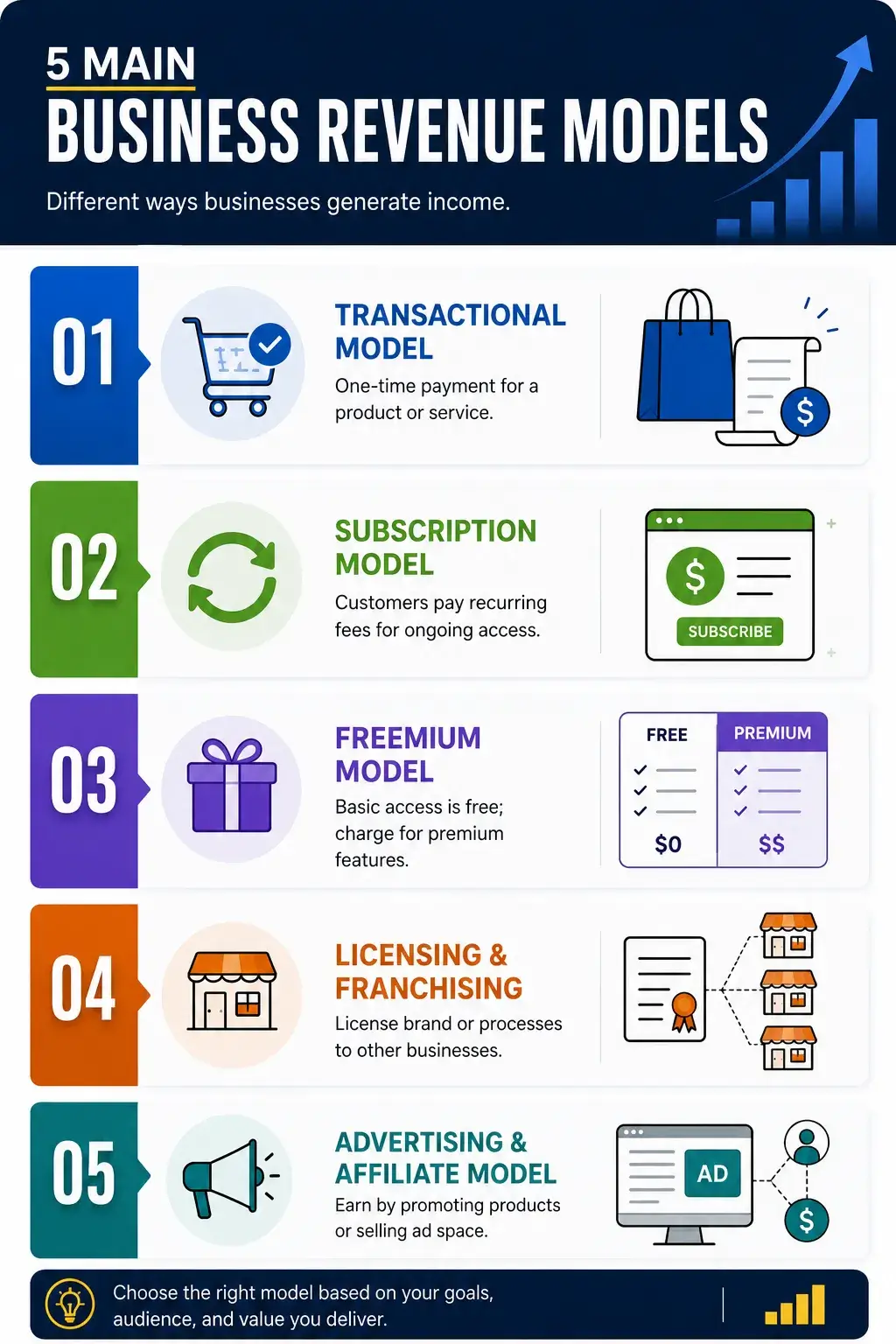
1. Transactional Revenue Model 🛒
This is the most traditional approach to how businesses generate revenue. Customers pay a one-time fee for a product or service. Retail stores, restaurants, and standard e-commerce platforms predominantly use this model. The key to success here is driving high sales volume and encouraging repeat purchases.
2. Subscription Revenue Model 🔄
In recent years, the subscription model has revolutionized how businesses generate revenue. Companies like Netflix and various SaaS providers charge customers a recurring fee for continued access. This model provides predictable, recurring revenue and fundamentally changes how businesses generate revenue by prioritizing customer retention over one-off sales.
3. Freemium Model 🎁
Popular in the tech industry, the freemium model offers basic services for free while charging a premium for advanced features. This strategy lowers the barrier to entry, demonstrating exactly how businesses generate revenue by building a massive user base before converting a percentage into paying customers.
4. Licensing and Franchising 🏢
Companies with strong intellectual property can generate income by licensing their brand or processes to third parties. This is a highly scalable method demonstrating how businesses generate revenue without directly managing every new location or product unit.
5. Advertising and Affiliate Models 📢
Platforms with massive audiences generate revenue by selling digital ad space. In this model, the paradigm of how businesses generate revenue shifts entirely, as the end-user is not the primary payer; the advertiser is.
🏭 How Businesses Generate Revenue Across Different Industries
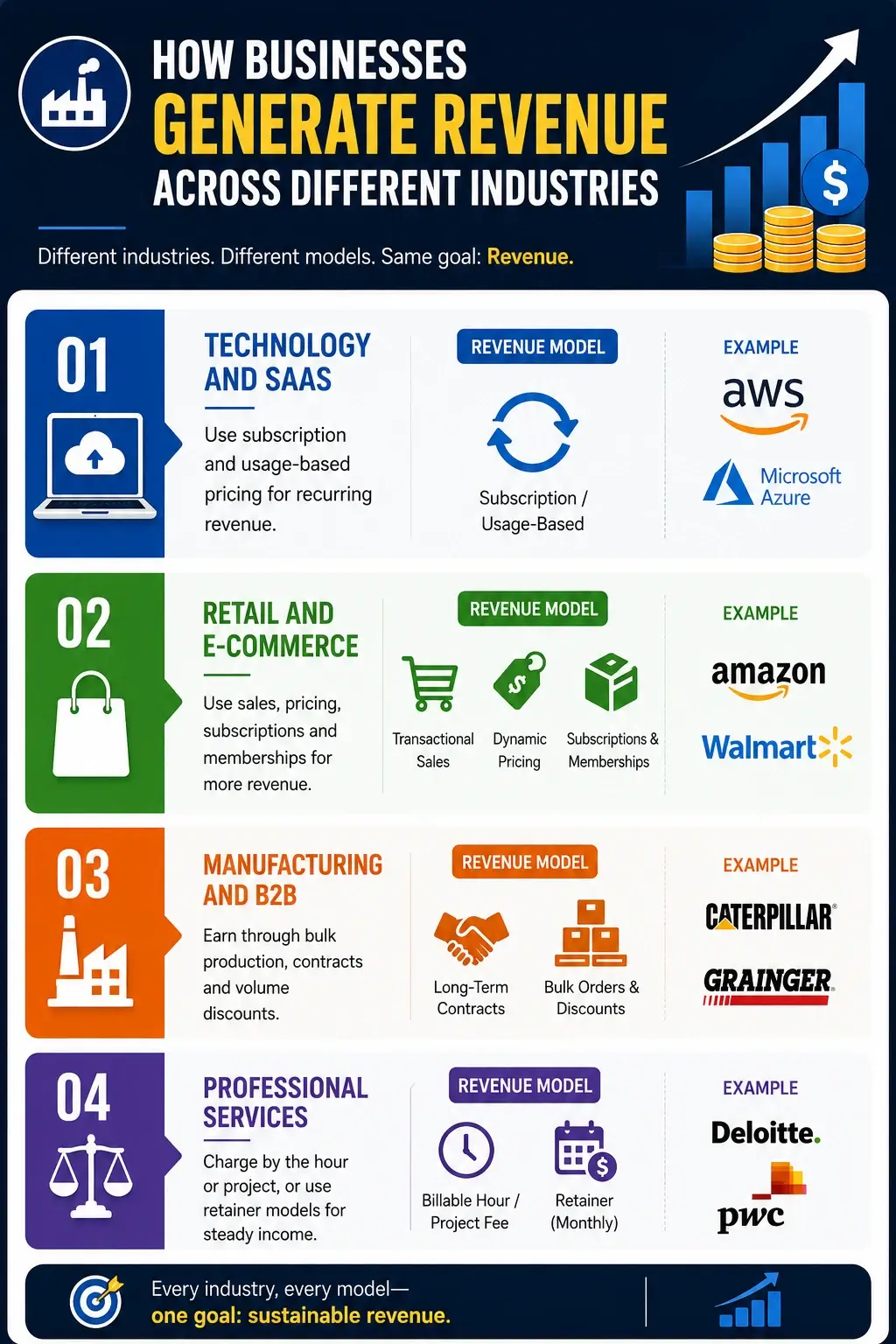
The application of these models varies significantly depending on the sector. Across the many Types of Businesses operating in the global economy, the mechanics of income creation look quite different. Let us examine how businesses generate revenue in four distinct industries:
- Technology and SaaS 💻: Software companies have largely shifted to cloud-based subscription models. This ensures continuous revenue streams and highlights how businesses generate revenue through recurring, usage-based pricing (e.g., AWS or Microsoft Azure).
- Retail and E-Commerce 🛍️: Traditional retail relies on the transactional model, but modern e-commerce has introduced dynamic pricing and subscription boxes. Retailers show how businesses generate revenue through ancillary streams like extended warranties and exclusive membership programs.
- Manufacturing and B2B 🏗️: Manufacturing businesses generate income by producing goods at scale. Long-term contracts and bulk-order discounts are common strategies, illustrating how businesses generate revenue by securing consistent, high-volume B2B cash flow.
- Professional Services ⚖️: Law firms and consulting agencies typically operate on a billable-hour or project-fee basis. However, many are transitioning to retainer models, demonstrating how businesses generate revenue by ensuring a steady monthly income in exchange for ongoing advisory services.
📈 Key Factors That Influence Revenue Growth
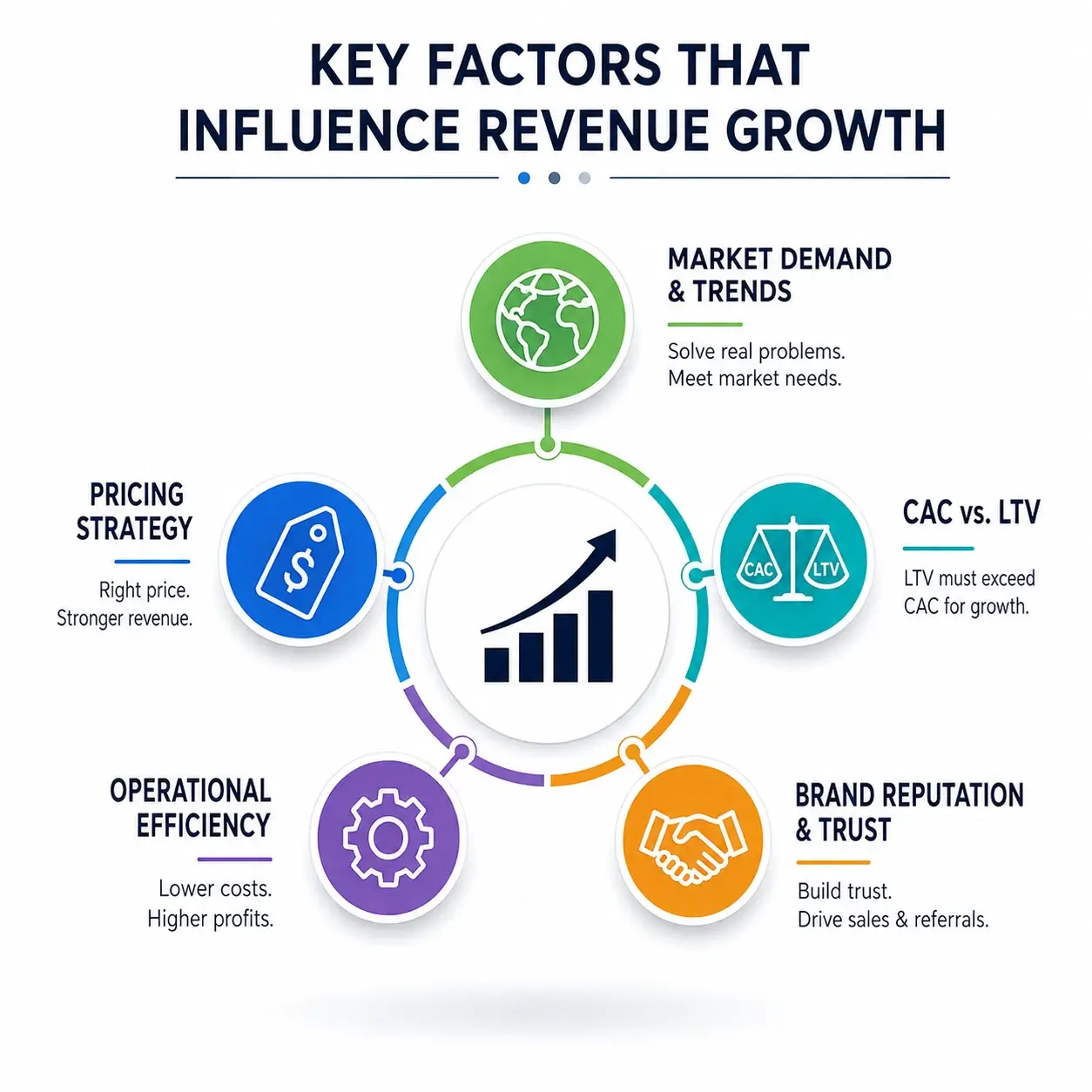
Knowing the available models is only half the battle. Several internal and external factors dictate the success of a company’s strategy for how businesses generate revenue:
- Market Demand and Trends 🌍: A product must solve a genuine problem. Aligning your offerings with current market demands ensures a steady stream of interested buyers, which is critical for how businesses generate revenue consistently.
- Pricing Strategy 💲: Pricing directly impacts both revenue volume and profit margins. Strategies like penetration pricing or value-based pricing must be carefully calibrated to optimize how businesses generate revenue without alienating the target demographic.
- CAC vs. LTV ⚖️: For sustainable growth, the Customer Lifetime Value (LTV) must significantly exceed the Customer Acquisition Cost (CAC). If it costs more to acquire a customer than they will ever spend, the model for how businesses generate revenue is fundamentally flawed.
- Operational Efficiency ⚙️: Streamlining operations reduces overhead, allowing more of the top-line revenue to convert into bottom-line profit, optimizing how businesses generate revenue at scale.
- Brand Reputation and Trust 🤝: Consumers are more likely to purchase from brands they trust. A strong reputation reduces friction in the sales process and encourages high-margin referrals, positively impacting how businesses generate revenue.
⚠️ Common Revenue Challenges Businesses Face
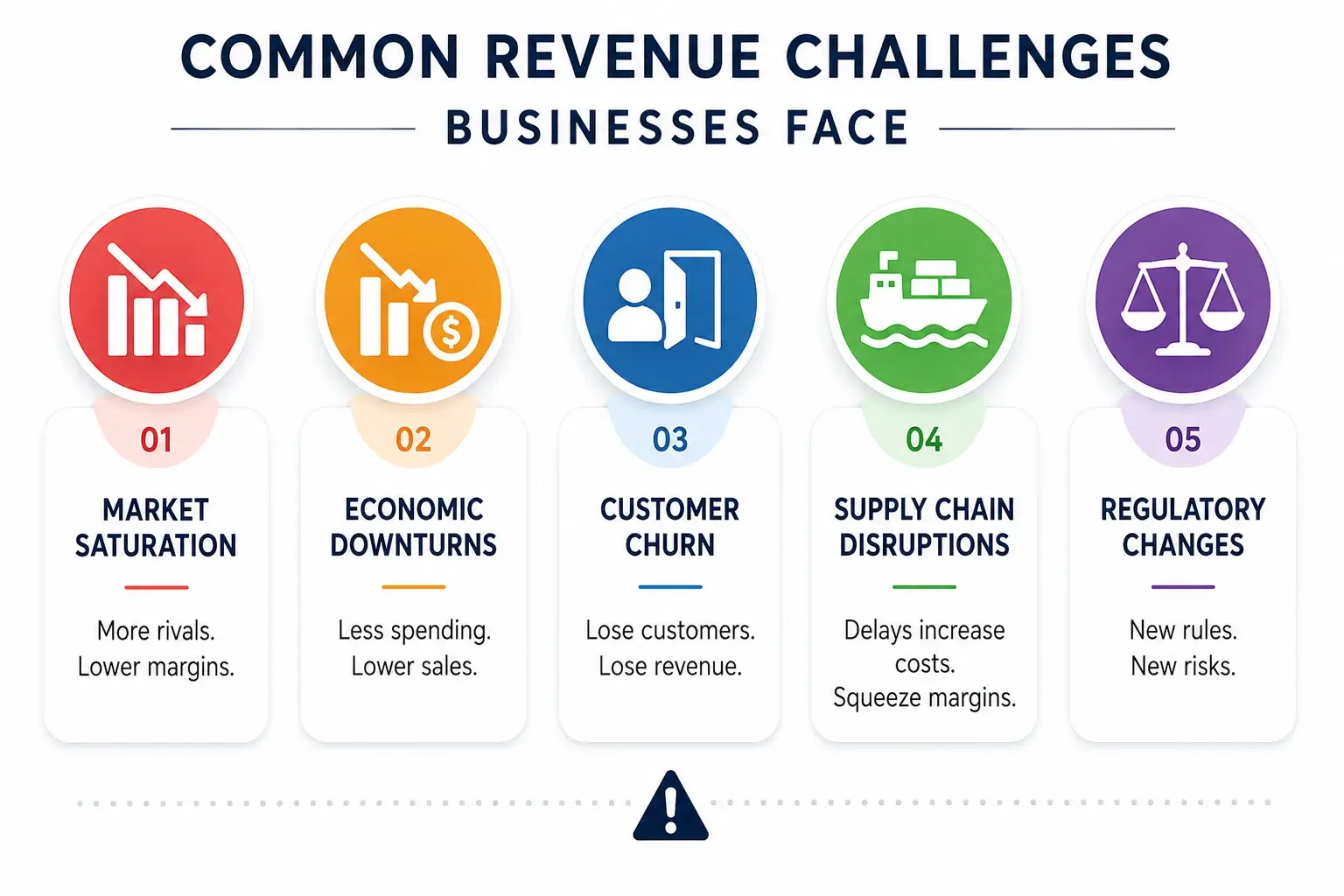
Even with a solid strategic plan, companies encounter significant hurdles when figuring out how businesses generate revenue at scale. Recognizing these challenges is vital:
- Market Saturation 📉: When too many competitors offer similar products, price wars can erode profit margins, making it difficult to sustain the margins of how businesses generate revenue without heavy marketing spend.
- Economic Downturns 📉: Recessions or high inflation can lead to reduced consumer spending, directly impacting overall sales volumes and disrupting how businesses generate revenue.
- Customer Churn 🚪: In subscription-based models, losing existing customers can quickly negate the revenue gained from new acquisitions, a major flaw in how businesses generate revenue if retention is ignored.
- Supply Chain Disruptions 🚢: Global events can delay production and increase the Cost of Goods Sold (COGS), squeezing margins and delaying the timeline of how businesses generate revenue from completed sales.
- Regulatory Changes ⚖️: New laws or compliance requirements can suddenly alter the financial viability of a specific stream, forcing companies to rethink how businesses generate revenue.
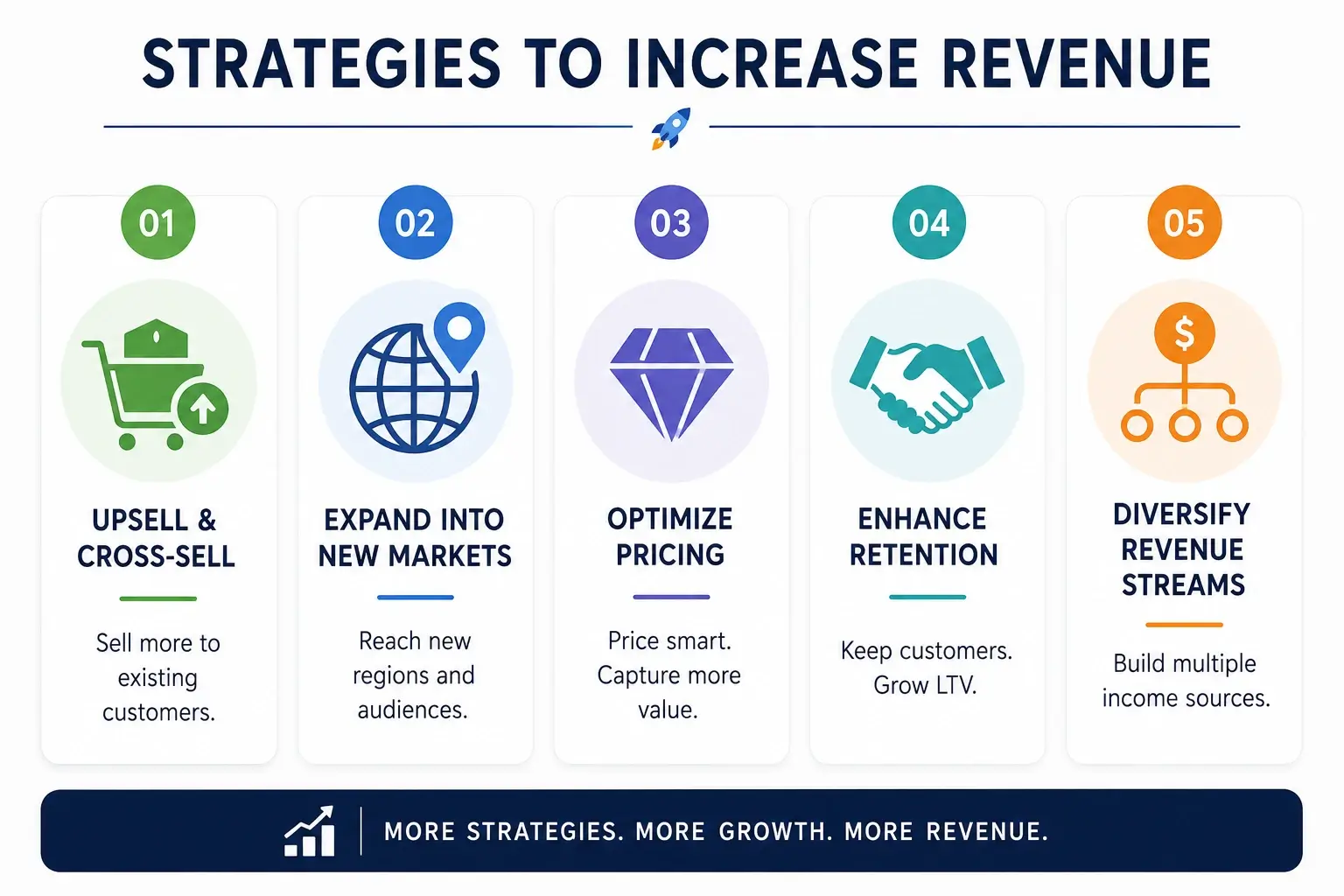
🚀 Strategies to Increase Revenue
To scale effectively, business leaders must continuously optimize their income streams. Here are proven, actionable strategies to drive top-line growth and improve how businesses generate revenue:
1. Upselling and Cross-Selling 📦
Encourage existing customers to purchase a higher-end version of a product or complementary items. This is a classic tactic that boosts average order value and enhances how businesses generate revenue from existing traffic.
2. Expand into New Markets 🌐
Geographic expansion or targeting a completely new demographic can unlock massive revenue potential. Adapting your platform for a new sector is a powerful way to diversify how businesses generate revenue.
3. Optimize Pricing Architecture 💎
Conduct regular pricing audits. Implementing tiered pricing or introducing a premium “enterprise” tier can capture more value from high-end clients, refining how businesses generate revenue across different customer segments.
4. Enhance Customer Retention 🤝
Acquiring a new customer can cost five times more than retaining an existing one. Investing in exceptional customer service increases LTV and stabilizes recurring revenue, securing the foundation of how businesses generate revenue long-term.
5. Diversify Revenue Streams
Do not rely on a single product. A manufacturing company might start offering predictive maintenance services, creating a new, highly profitable recurring stream and transforming how businesses generate revenue.
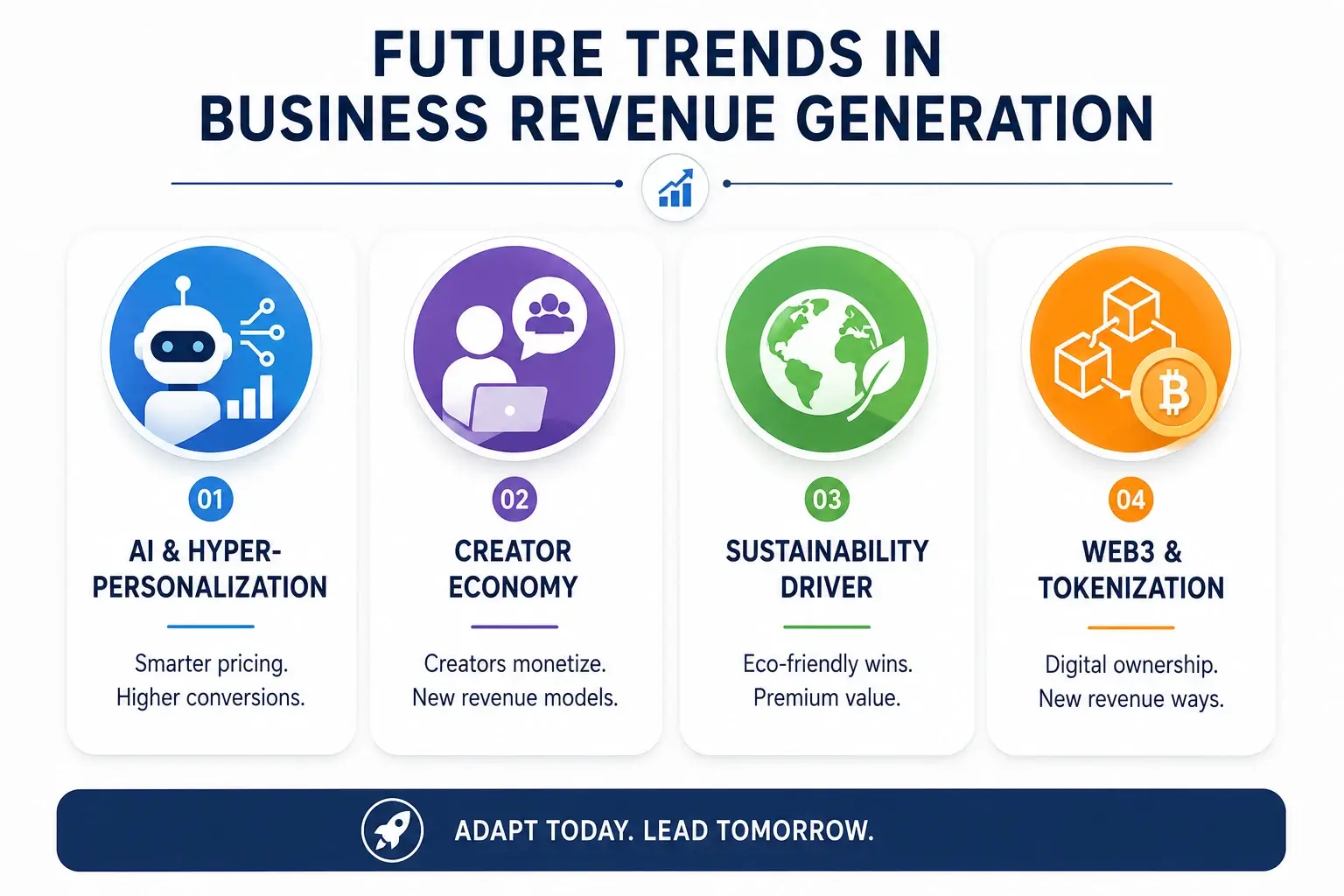
🔮 Future Trends in Business Revenue Generation
The landscape of income creation is rapidly evolving. Forward-thinking organizations are already adapting to these emerging trends to stay ahead in how businesses generate revenue:
- Artificial Intelligence and Hyper-Personalization 🤖: AI enables dynamic pricing and highly personalized product recommendations, maximizing conversion rates and revolutionizing how businesses generate revenue in real-time.
- The Rise of the Creator Economy 🎨: Individuals are monetizing audiences directly through exclusive digital communities, bypassing traditional corporate structures and changing how businesses generate revenue at the micro-level.
- Sustainability as a Revenue Driver 🌱: Consumers are increasingly willing to pay a premium for eco-friendly products. Companies that embed sustainability into their core offerings are seeing tangible financial benefits, shaping how businesses generate revenue ethically.
- Web3 and Tokenization 🪙: Blockchain technology is creating novel ways for businesses to generate revenue through digital ownership and decentralized finance, representing the future of how businesses generate revenue online.
🎯 Conclusion
Mastering how businesses generate revenue is not a one-time exercise; it is an ongoing strategic imperative. From selecting the right foundational revenue model to adapting to future market trends, every operational decision impacts the financial health of an organization.
Whether you are leveraging a traditional transactional model, embracing the predictability of subscriptions, or innovating with AI-driven personalization, the core principle remains the same: deliver undeniable, measurable value to your customers. By understanding the diverse mechanisms of how businesses generate revenue, anticipating market challenges, and implementing proactive growth strategies, you can build a resilient, highly profitable enterprise.
As you evaluate your own business or investment opportunities, continually ask yourself: Are we optimizing how businesses generate revenue in our specific context? The answer to that question will ultimately define your long-term success, proving that understanding how businesses generate revenue is the ultimate key to sustainable growth in the global marketplace. 🚀
FAQ
Q: What is the difference between Revenue, Profit, and Cash Flow?
A: Revenue is total sales (the top line). Profit is what’s left after expenses are paid (the bottom line). Cash Flow is the actual timing of money moving in and out of your bank account.
Insight: High profits won’t save you if cash flow is negative (e.g., clients haven’t paid their invoices yet).
Q: Which revenue model has the highest profit margins?
A: Digital products, SaaS subscriptions, and licensing. Because the cost to reproduce a digital good for a new user is near zero, margins often exceed 70–90%, unlike physical goods that require manufacturing and shipping.
Q: Can a business use multiple revenue models?
A: Yes, this is a Hybrid Model and is highly recommended for risk mitigation. Example: Apple makes money from hardware sales, software subscriptions (iCloud), and app store transaction fees.
Q: How do “free” apps make money?
A: Through Advertising (selling user attention/data to third parties) or the Freemium Model (offering basic features for free, then charging a small percentage of users for premium upgrades).
Q: What is a “healthy” revenue growth rate?
A: For early-stage startups, investors look for explosive growth (tripling year-over-year). For mature companies, a steady 5% to 10% annual growth is considered healthy and sustainable.
Q: Do discounts always increase revenue?
A: No. Discounts increase sales volume but shrink profit margins. You must sell significantly more units just to make the same total profit. Use them strategically to clear inventory or acquire high-value customers, not as a permanent crutch.
Q: What is “Deferred Revenue”?
A: Money paid upfront for a service not yet delivered (e.g., an annual subscription paid in January). It is recorded as a liability on the balance sheet and recognized as actual revenue month-by-month as the service is provided.
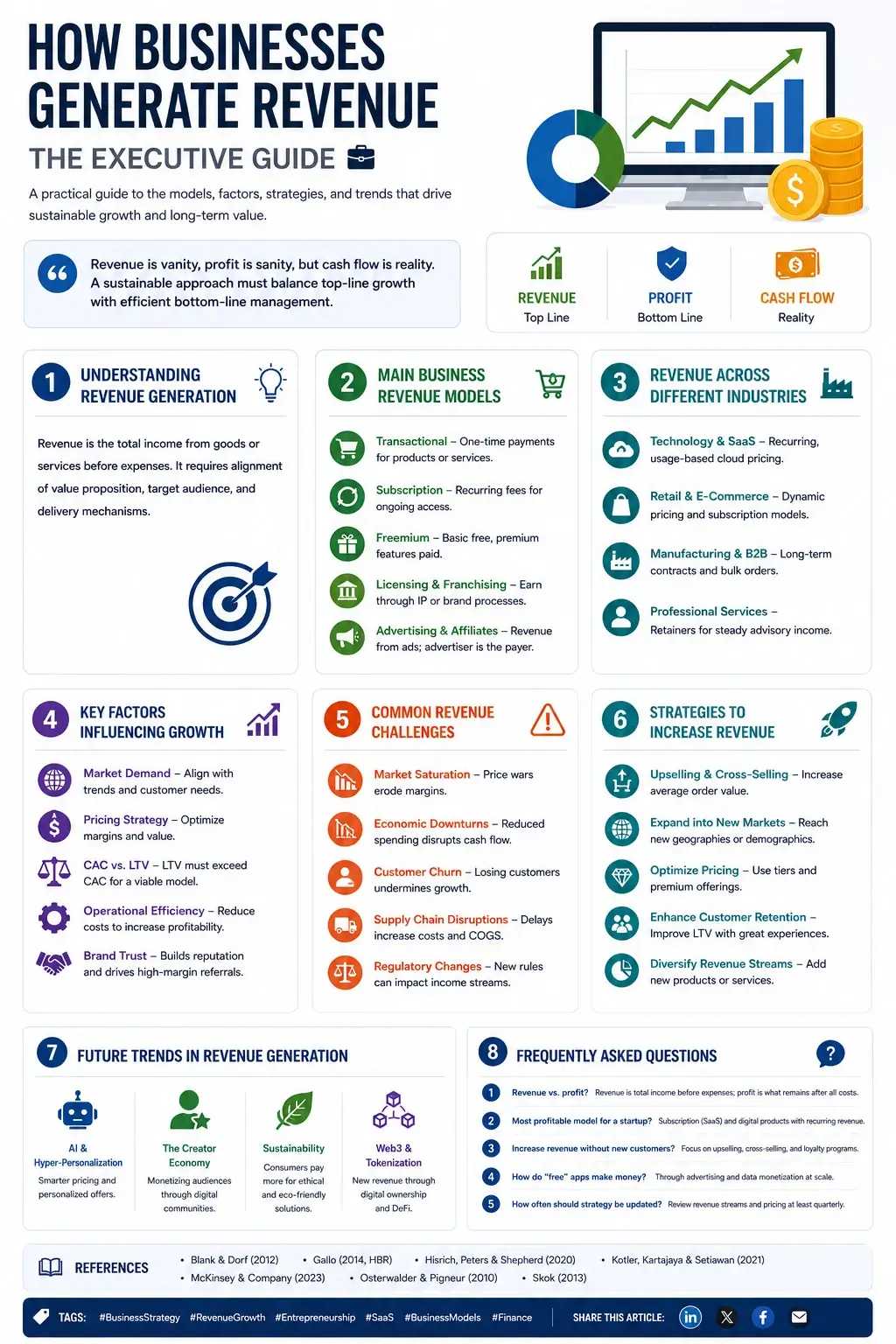
Infographic
References
- Blank, S., & Dorf, B. (2012). The startup owner’s manual: The step-by-step guide for building a great company. K&S Ranch.
- Gallo, A. (2014, October 23). The value of keeping the right customers. Harvard Business Review. https://hbr.org/2014/10/the-value-of-keeping-the-right-customers
- Hisrich, R. D., Peters, M. P., & Shepherd, D. A. (2020). Entrepreneurship (11th ed.). McGraw-Hill Education.
- Kotler, P., Kartajaya, H., & Setiawan, I. (2021). Marketing 5.0: Technology for humanity. John Wiley & Sons.
- McKinsey & Company. (2023, July 26). The economic potential of generative AI: The next productivity frontier. https://www.mckinsey.com/capabilities/mckinsey-digital/our-insights/the-economic-potential-of-generative-ai-the-next-productivity-frontier
- Osterwalder, A., & Pigneur, Y. (2010). Business model generation: A handbook for visionaries, game changers, and challengers. John Wiley & Sons.
- Skok, D. (2013). SaaS metrics 2.0 – A guide to measuring and improving what matters. ForEntrepreneurs. https://www.forentrepreneurs.com/saas-metrics/

 Inar Learn